
Can Solar Batteries Power My House During a Blackout?
Posted by LinioTech on Feb 23rd 2026
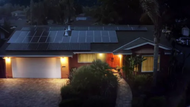
What will you do when, on a stormy night or a freezing winter evening, suddenly, the neighborhood goes dark? Obviously, get worried or start collecting supplies to survive the unforeseen. What if, when most houses are hunting for candles and worrying about the food in the fridge, your lights stay on? Your internet keeps running, and your home stays warm.
This isn't magic! It’s the result of having the right solar batteries power your home. But does every solar system work this way? Not exactly. Let’s look at how you could use solar power batteries to make your life continue when the grid goes down.
How Solar Batteries Work During Power Outages
Most people believe that having solar panels implies backup power. That's not quite right.
Normal solar panels go off during power outages. This happens because of a significant safety reason. People repairing broken power lines might be injured if electricity is restored to the system. Your solar system stops working to protect them.
Solar-energy batteries power your home differently. With a solar power backup system, it would detect a blackout within a second. The battery goes into an “islanding mode.” This means that your house loses connection with the grid and instead, it uses stored energy.
Think of it like this: Your house becomes its own little power island. The grid goes dark, but your lights stay on.
What You Need for Solar Battery Backup
Not all solar batteries can power your house during a blackout. You need specific equipment:
The Right Inverter
A hybrid inverter manages power from three sources: your solar panels, your battery, and the grid. During normal times, it pulls from whichever source makes the most sense. Upon grid failure, the grid automatically cuts off all the loads to battery power.
This cannot be done with standard inverters. They're like one-way streets. Hybrid inverters work like traffic controllers, directing power where it needs to go.
Backup Circuits or Transfer Switch
Most homes can't run everything on battery power. An electrician sets up "essential circuits" during installation. These circuits get power during blackouts:
- Refrigerator and freezer
- Several lights in the main rooms
- Phone and device chargers
- Internet modem and router
- One or two regular outlets
Everything else stays off to make your battery last longer. You won't run the dishwasher, washing machine, or air conditioning during an outage. Most families accept this trade-off. The food stays cold, and phones stay charged.
Some advanced systems offer whole-house backup. This costs more and needs larger batteries, but everything keeps running during blackouts.
Proper System Configuration
Here's what surprises many homeowners: buying a battery doesn't guarantee backup power. The system must be configured for backup from day one.
Even with a battery fitted, grid-tied solar systems with no backup settings will stop fully during outages. That battery is just lying there with the energy that you cannot utilize. A professional solar battery backup installation that includes backup wiring makes all the difference.
How Long Can Solar Batteries Power Your Home?
The power of the battery is what dictates the number of hours of power. Capacity measures in kilowatt-hours (kWh). Think of kWh like gallons in a gas tank. The more gallons you use, the further you drive. The higher the kWh, the longer your house will operate.
An average home battery contains 10-14kWh of usable energy. This will run only essential things and has 12-24 hours of power. Here's the breakdown:
What Uses Your Battery Power:
- Refrigerator: 1.5kWh/day of energy consumed per day.
- LED lights (8 bulbs): use about 1kwh of electricity in a day.
- WiFi router and charging of devices: It used about 0.5kWh/day.
- Small appliances (coffee maker, microwave): use approximately 1kWh of electricity per day.
Add all these, and you are burning approximately 4kWh a day on essentials. The 13.5kWh battery can work for three days without the sun shining.
This is the added advantage, though: Solar panels can recharge your battery during power outages in the day. If the power outage happens on a sunny day, your panels keep generating power. They charge the battery while you use power. This can extend your backup for days or even weeks.
Cloudy days still produce some solar energy. Every bit helps stretch your battery runtime when outages last beyond a few hours.
Different Types of Backup Systems
Essential Circuits Backup
This setup powers only critical items. Your battery lasts much longer because you're not running heavy appliances. A 10kWh battery running essentials can provide 12-24 hours of power, sometimes more, depending on usage.
Most families in areas with occasional short outages choose this option. It costs less and provides plenty of backup for typical blackout situations.
Whole House Backup
This configuration powers everything at once. Lights, appliances, air conditioning, all circuits stay active. The convenience comes at a price: you need bigger batteries and higher power output.
Homes that experience rare, brief outages benefit from this setup. The downside appears when you forget about the blackout. Running the dryer or electric oven can drain your solar battery for blackout backup within hours.
What Makes Liniotech Solar Batteries Different
When blackouts happen, you need more than just a battery. You need a system backed by real support.
Linotech’s batteries use Grade A CATL and REPT LiFePO₄ cells. These cells offer superior safety and reliability compared to other battery types. LiFePO₄ chemistry provides thermal stability, it won't overheat or catch fire as some batteries can.
Every Liniotech battery meets UL 1973, UL 9540, and UL 9540A safety standards. These certifications mean the battery passed rigorous testing for fire safety and performance. Our CEC listing qualifies the system for use throughout North America.
As an official Sol-Ark battery partner, their systems integrate seamlessly with Sol-Ark hybrid inverters. This partnership validates our quality and ensures smooth communication between components. No guesswork, no compatibility issues.
Moreover, their Houston-based engineering team provides local support. When you call with a question at 2 AM during a storm, you reach real engineers who can help. That addresses the biggest complaint we hear: other companies abandon customers after installation.
Important Things to Know
Automatic vs. Manual Switching
Advanced systems like our Sol-Ark-compatible batteries switch to backup mode instantly when they detect a grid failure. You might not even notice the power went out.
Some older or basic systems require manual switching. You'd need to flip breakers or press buttons to activate backup mode. This works, but it's less convenient during emergencies.
Solar Charging During Outages
Not all backup systems let solar panels charge the battery during blackouts. Some configurations disable the panels when grid power drops out. You're limited to whatever charge existed when the outage started.
Better systems allow continuous solar generation during outages. Your panels keep feeding the battery while the grid stays offline. This capability must be specified during installation. Retrofitting it later can be difficult or impossible.
Cost Considerations
Adding backup capability to an existing solar system requires additional equipment. Budget for:
- Hybrid inverter upgrade (if needed)
- Backup wiring and transfer switch
- Possible electrical panel modifications
- Professional installation and configuration
Installing everything together from the start costs less than retrofitting later. Plan for backup power when you first go solar.
Take Control During the Next Blackout
Robust solar batteries power your house during a blackout when designed correctly. The key is to have a complete system with a backup feature on the first day. You have a house with lights and a fridge with cold food, and your family remains safe while neighbors cope with darkness and spoiled groceries. It is that peace of mind that is worth the investment.
Ready to explore solar-energy battery backup for your home? Contact Liniotech to discuss your needs. Our team will assist you in sizing a system that will allow your appliances to run if there is another power outage. With our U.S.-based engineering support and UL-certified equipment, you get reliability when it matters most.
Don't wait until the next storm hits. Contact us and get your backup power sorted now.