
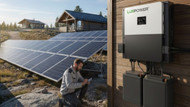
How Many Solar Panels Do You Need for a Luxpower 6kW Off-Grid Inverter System?
Posted by Liniotech Energy on Dec 22nd 2025
Designing an off-grid solar inverter system always comes down to one core decision: sizing the solar array correctly. Every homeowner wants to know the same thing: how many panels are required to run a reliable system with a luxPower 6kW inverter? It sounds simple, but the honest answer is shaped by sunlight availability, daily energy use, panel wattage, and the system's configuration efficiency.
What this really means is that the panel count isn’t just a number; it determines whether the inverter performs smoothly during cloudy spells, high-demand hours, or long evenings off the grid. An appropriately sized array gives the luxPower 6kW room to operate at full capacity. Too few panels, and the batteries struggle. Too many, and homeowners overspend without realizing meaningful performance gains.
At the end of the day, you want a system that never wavers, one that delivers consistent power no matter the environment. If you're planning a new installation or evaluating your current setup, this is the moment to get the numbers right before anything else. Let’s dig in and break down how many panels a luxPower 6kW system truly needs.
Understanding the Off-Grid Solar Inverter System Requirements
A reliable off-grid solar inverter system starts with one thing: a consistent flow of solar power. It’s what keeps appliances running, batteries charged, and peak loads under control. The luxPower 6kW series, especially its split-phase model, is designed for homes that need both 120V and 240V power. Homeowners choose luxPower because it manages everyday household demand and battery charging cycles with solid efficiency. But here’s the thing the system only performs at its best when the solar array is sized correctly. The inverter relies on a steady supply of incoming power, and the accuracy of the panel sizing determines how well the entire setup performs in real-world use.
Why does panel count matter?
If the array produces too little energy, the inverter can’t power all loads. If the variety produces too much, the system becomes unnecessarily expensive. Solar production doesn’t stay flat. Cloud cover, temperature, wiring losses, shading, and inverter conversion all affect the final power delivered. A system that looks perfect on paper may struggle during real conditions if the array has no margin. The recommended panel counts help balance fluctuations, ensuring the inverter operates at full capacity throughout the day. Getting the balance right is key because every part of the system draws from the same solar supply.
- Solar panels rarely output their full wattage
- Cloudy conditions reduce performance.
- Batteries require extra charging power.
- Off-grid systems should have a safety buffer.
Sunlight hours vary by location. Some areas receive strong, consistent sunshine year-round, while others experience seasonal dips and shorter days. These variations directly affect the number of solar panels required for an off-grid system.
Recommended Panel Count for a Luxpower 6kW Off-Grid Inverter System
Determining the correct number of panels starts with understanding what the inverter expects from the array. A luxpower 6 kW off-grid inverter system doesn’t operate at its 6 kW rating alone. It depends on the solar panels to deliver sufficient real-time power to meet daily loads while still charging the batteries. When the array is undersized, everything feels sluggish: slower charging, voltage dips, and inconsistent output during peak use. The inverter performs best when the panels deliver continuous energy throughout the day. That’s why panel wattage becomes the deciding factor. Higher-watt modules reduce the number of panels required, while lower-watt modules require more panels to achieve the same usable production.
Here’s the panel breakdown based on widely used module wattages:
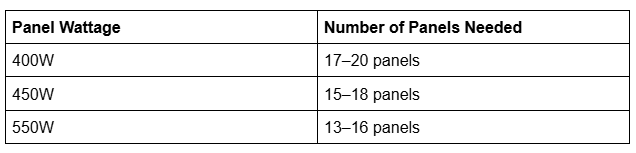
For any luxpower 6kW off-grid solar working setup, these panel ranges provide stable input, support heavier loads, and maintain consistent charging throughout the day.
What does this mean for System Planning?
Once you know the wattage of the panels you want to use, pick the count that fits your energy habits and available roof space. A household with heavier daytime usage may choose the higher end of the range, while a carefully managed setup may sit comfortably in the middle. The goal remains the same either way: provide the luxpower 6kW off-grid inverter system with a steady solar supply so it can deliver predictable, consistent off-grid power.
Understanding Your Household Energy Needs
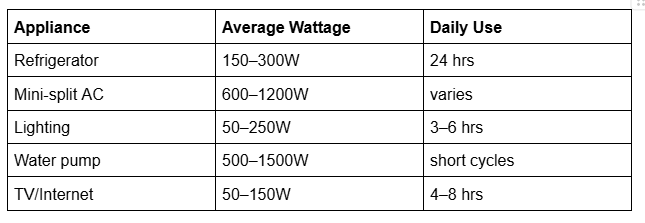
Even the strongest off-grid solar inverter system can only perform to the level it’s sized for. Once you know your actual load profile, everything else, panel count, battery capacity, and inverter requirements, falls into place. Standard home appliances and typical watt usage.
Conclusion!
Sizing an off-grid solar inverter system shouldn’t feel confusing. With the right approach, homeowners can achieve reliable, 24/7 energy with a dependable luxpower 6kW setup. Remember, most systems need around 16 to 20 panels, depending on wattage and sun exposure. Adjustments happen based on lifestyle, region, and battery storage needs.
With Liniotech, homeowners get more than equipment. They get engineering support, reliable guidance, and premium products tailored for real-world conditions. If you’re ready to build a dependable off-grid setup or upgrade your energy system, reach out today. We will guide you through selecting the right solar panels, batteries, and inverter setup to match your home and climate. Contact us and speak with an expert who understands your energy goals and can help you design a system that works the first time.