
Leveraging Lithium-Ion Energy Storage to Create Low-Emissions Offshore Drilling Rig ! Lower Carbon Solution!!!
Posted by LINIOTECH on Sep 19th 2021
Offshore drilling rigs have always required strong, stable, and reliable power. From drilling equipment and mud pumps to cranes, accommodation loads, dynamic positioning systems, and emergency backup, almost every critical operation depends on electricity. Traditionally, this power has come from diesel-electric generator systems. While reliable, these systems can consume large amounts of fuel and produce significant carbon emissions.
In 2026, offshore operators are under increasing pressure to improve fuel efficiency, reduce greenhouse gas emissions, and modernize power systems without compromising safety. Lithium-ion energy storage is becoming one of the most practical solutions for this transition. Instead of relying only on diesel generators, offshore rigs can use battery energy storage systems to support peak loads, provide fast backup power, reduce engine runtime, and improve overall power quality.
The wider maritime sector is also moving toward lower-emission technologies. The International Maritime Organization’s 2023 GHG strategy targets at least a 40% reduction in carbon intensity by 2030 and net-zero greenhouse gas emissions from international shipping by or around 2050. While offshore rigs are not the same as cargo vessels, these marine decarbonization goals continue to influence offshore energy decisions in 2026.
What Is Lithium-Ion Energy Storage for Offshore Drilling Rigs?
Lithium-ion energy storage for offshore drilling rigs refers to battery systems that store electrical energy and release it when the rig needs additional power. These systems are usually connected to the rig’s power management system and work alongside diesel generators, switchboards, converters, and control systems.
In a hybrid offshore power plant, batteries are not simply used as emergency backup. They can support daily operations by responding instantly to changing loads. Offshore drilling loads are rarely constant. Hoisting, pumping, rotation, dynamic positioning, and hotel loads can create sudden power demand changes. A battery system can absorb extra energy when demand is low and discharge power when demand rises.
This makes lithium-ion energy storage useful for:
- Peak shaving
- Load leveling
- Spinning reserve support
- Blackout prevention
- Generator optimization
- Dynamic positioning support
- Short-term backup power
- Renewable or shore-power integration
A review of battery energy storage systems in hybrid and electric ship propulsion found that marine BESS applications include peak shaving, load leveling, spinning reserve, and fast load response. It also notes that battery-supported power generation can allow vessels to run fewer generators and reduce fuel consumption and emissions during DP drilling operations.
Why Offshore Rigs Need Battery-Supported Power Systems
Traditional offshore rigs often keep additional diesel generators running as spinning reserve. This means engines remain online even when the rig does not need their full output. Operators do this because offshore drilling requires high reliability. If a generator fails or a load spike occurs, the rig must still maintain power for safety-critical equipment.
However, running generators at low or inefficient load creates several problems. It increases fuel use, raises emissions, adds engine wear, and can lead to higher maintenance costs. Battery energy storage helps solve this by acting as a fast-response power source.
When a sudden load spike occurs, the battery can discharge almost instantly. When load drops, the battery can recharge. This helps diesel generators operate closer to their efficient load range instead of running multiple engines at low load.
For offshore operators, the benefit is not only lower carbon emissions. A well-designed hybrid system can also improve reliability, reduce mechanical stress, and help prevent blackout events.
West Mira: A Milestone for Hybrid Offshore Drilling
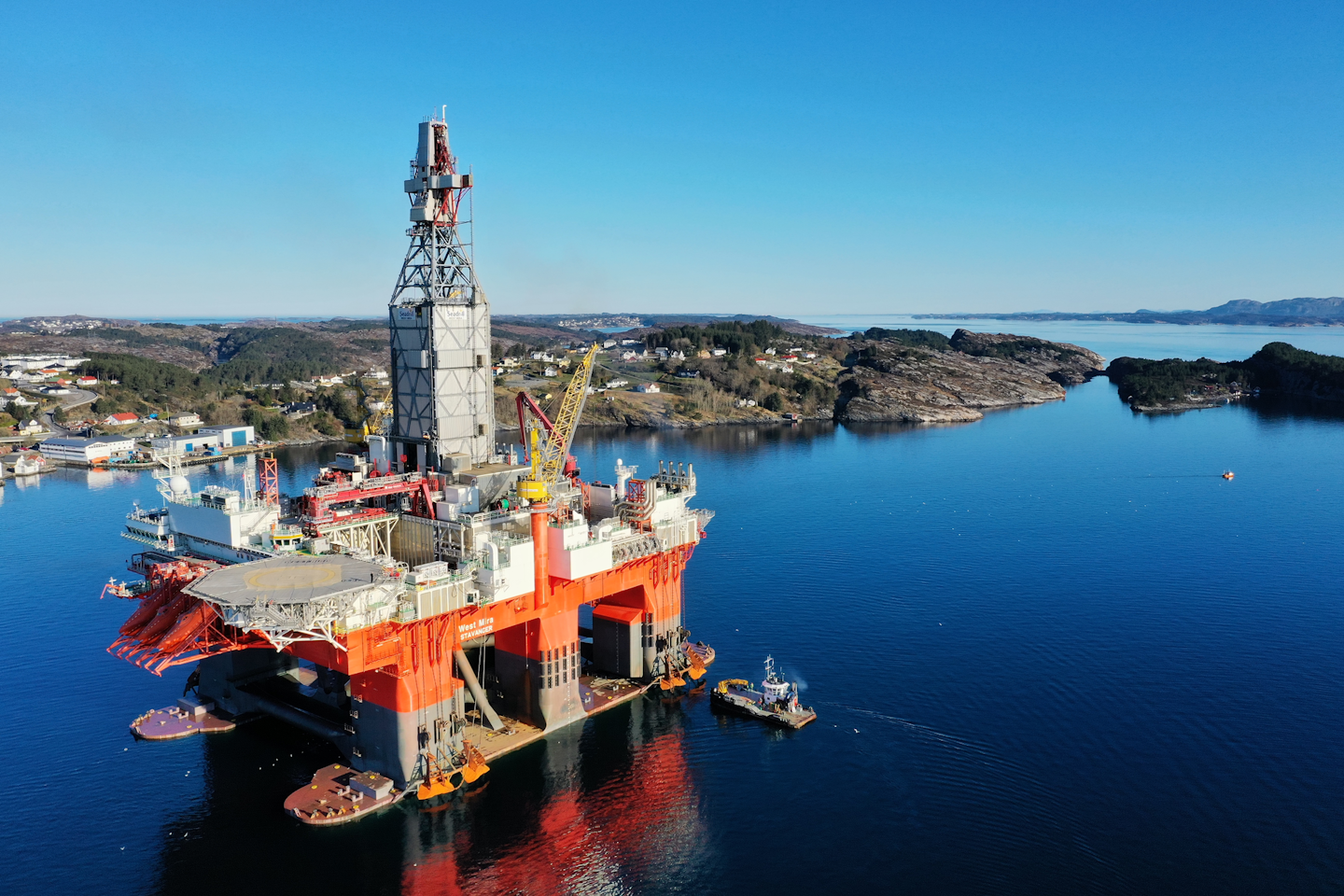
One of the most important examples of lithium-ion energy storage in offshore drilling is the West Mira rig. West Mira became the first rig in operation to receive DNV GL Battery Power class notation. The ultra-deepwater semi-submersible uses lithium-ion batteries as spinning reserve during dynamic positioning operations and to supply power during peak load times.
According to DNV, the West Mira energy storage system was developed with Seadrill/Northern Drilling, Siemens, Kongsberg Maritime, and DNV GL. The operator estimated that the system could reduce on-platform diesel engine runtime by 42%, cut CO₂ emissions by 15%, and reduce NOx emissions by 12%. The system was also designed to provide backup power and help prevent blackout situations.
In 2026, West Mira remains an important milestone rather than a “new” project. Its value is that it proved battery-supported offshore drilling power could be engineered, tested, classed, and used in a demanding marine environment.
How Lithium-Ion Batteries Help Reduce Offshore Emissions
Lithium-ion energy storage can reduce offshore emissions in several practical ways.
1. Reducing Diesel Engine Runtime
Battery systems can provide fast reserve power, allowing operators to run fewer diesel generators during certain operating conditions. Fewer running engines usually means less fuel consumption and fewer emissions.
2. Improving Generator Efficiency
Diesel generators are most efficient when operating within an optimal load range. If generators run at low load for long periods, fuel efficiency drops. Batteries help smooth load demand so engines can operate more efficiently.
3. Supporting Peak Shaving
Offshore drilling operations often experience short-duration power peaks. Instead of starting another generator for a temporary load spike, the battery can supply extra power instantly. This reduces unnecessary generator starts and improves system efficiency.
4. Supporting Dynamic Positioning
Dynamic positioning systems need stable, reliable power. Batteries can support DP operations by acting as a fast-response spinning reserve. DNV notes that its battery notation and DP rule updates include batteries as a redundant power source for dynamically positioned vessels.
5. Enabling Renewable and Shore-Power Integration
As offshore wind, floating wind, solar support systems, and power-from-shore strategies continue to develop, batteries can help balance variable power sources. Energy storage can store excess power and release it when generation drops or demand increases.
Why LiFePO4 Battery Chemistry Matters
Lithium-ion batteries are available in different chemistries. For stationary, commercial, and industrial energy storage, lithium iron phosphate, also known as LiFePO4 or LFP, is widely valued because of its long cycle life, stable performance, and strong thermal characteristics.
For offshore and marine environments, safety is critical. Battery systems must be designed to prevent overheating, short circuits, water intrusion, fire propagation, and thermal runaway. Offshore installations also require careful engineering, ventilation, fire detection, fire suppression planning, electrical protection, and compliance with applicable marine or offshore standards.
A safe energy storage system should include:
- Advanced battery management system
- Cell, module, and rack-level monitoring
- Temperature and voltage protection
- Fire detection and mitigation planning
- Electrical isolation and emergency shutdown
- Thermal management
- Proper enclosure design
- Qualified installation and maintenance
- Project-specific certification review
LINIOTECH offers LiFePO4-based energy storage products for solar storage, backup power, and off-grid applications. For example, the 10kWh 48V 200Ah UL1973 Power Storage Wall is designed for solar energy storage and outage backup use, while the 14.3kWh floor-mounted all-weather LiFePO4 battery is positioned for residential solar, whole-home backup, and off-grid applications.
The Role of Inverters and Power Conversion
Batteries alone do not create a complete hybrid power system. Offshore and industrial energy storage projects also require inverters, converters, switchgear, control systems, and power management software.
The inverter or converter controls how stored DC battery power is converted into usable AC power. It also helps manage charging, discharging, grid interaction, load balancing, and system protection.
For smaller off-grid, backup, and solar-plus-storage applications, LINIOTECH offers products such as the 12kW 48V 120/240V split-phase off-grid solar inverter, which includes dual MPPT solar input, 48V battery compatibility, and 120/240V split-phase output. Large offshore drilling rigs require custom-engineered marine-grade power conversion systems, but the basic principle is the same: battery storage must be properly integrated with the full electrical architecture.
Safety Challenges of Lithium-Ion Batteries Offshore
Safety is one of the biggest concerns when using lithium-ion batteries in offshore environments. Offshore rigs are isolated, exposed to harsh weather, and often operate near combustible fuels and complex machinery. This means battery systems must be engineered with multiple layers of protection.
One major risk is thermal runaway. This can occur when a battery cell overheats and triggers a chain reaction. In offshore environments, this risk must be managed through chemistry selection, battery management software, physical separation, fire-resistant design, ventilation, gas detection, and emergency response planning.
It is not enough to install a battery and connect it to the electrical system. The entire installation must be reviewed as a complete safety system. That includes battery racks, cabling, cooling, enclosure rating, fire suppression, access routes, alarms, shutdown procedures, and maintenance plans.
For offshore projects, operators should work with qualified engineers, classification bodies, and safety authorities to ensure the system meets all required standards.
Business Benefits for Offshore Operators
Lower emissions are important, but energy storage also provides strong business benefits.
Lower Fuel Costs
Fuel is a major operating cost for offshore rigs. Reducing unnecessary diesel runtime can create long-term savings.
Lower Maintenance Costs
When generators run fewer hours, operators may reduce wear, oil changes, servicing, and overhaul requirements.
Better Power Quality
Battery systems respond quickly to load changes, helping stabilize voltage and frequency.
Improved Operational Resilience
A battery system can provide fast backup support during generator trips or sudden power disturbances.
Stronger ESG Performance
Hybrid power systems can support corporate sustainability goals, emissions reporting, and lower-carbon offshore strategies.
The Future of Lower-Emission Offshore Drilling
In 2026, the future of offshore drilling power is not based on one technology alone. The industry is moving toward a mix of diesel optimization, lithium-ion battery storage, power-from-shore, offshore renewable energy, alternative fuels, digital monitoring, and smarter power management.
Lithium-ion energy storage is one of the most practical transition technologies because it can work with existing diesel-electric systems. It does not require offshore rigs to become fully electric immediately. Instead, it allows operators to lower emissions step by step while maintaining reliability.
As battery technology, marine standards, and hybrid control systems continue to improve, more offshore assets are likely to evaluate battery-supported power systems. The goal is clear: reduce fuel consumption, lower emissions, improve safety, and build a more efficient offshore energy future.
Conclusion
Lithium-ion energy storage is helping offshore drilling rigs move toward lower-emission operations. By supporting peak shaving, spinning reserve, generator optimization, blackout prevention, and renewable integration, batteries can improve both environmental and operational performance.
The West Mira project showed that battery energy storage can be successfully integrated into offshore drilling operations. In 2026, this technology remains highly relevant as offshore operators search for reliable ways to reduce diesel runtime, fuel use, emissions, and operating costs.
For companies exploring solar storage, backup power, off-grid systems, or commercial energy storage, LINIOTECH provides lithium battery and inverter solutions designed to support cleaner, smarter, and more resilient energy systems.
FAQs
1. How does lithium-ion energy storage reduce emissions on offshore drilling rigs?
Lithium-ion energy storage reduces emissions by lowering diesel generator runtime, supporting peak power demand, improving generator loading, and reducing the need to keep extra engines running as spinning reserve.
2. Can batteries fully replace diesel generators on offshore rigs?
In most offshore drilling applications, batteries do not fully replace diesel generators. They work alongside generators in a hybrid power system to improve efficiency, provide fast backup power, and reduce fuel consumption.
3. Why are batteries useful for dynamic positioning operations?
Dynamic positioning requires stable and reliable power. Batteries can act as fast-response reserve power, helping support thrusters and critical systems during sudden load changes or generator disturbances.
4. Is LiFePO4 a good battery chemistry for energy storage?
LiFePO4 is widely used in energy storage because it offers long cycle life, stable performance, and strong thermal characteristics. For offshore use, the full system must still be engineered and certified for the specific marine environment.
5. What is the future of battery storage in offshore oil and gas?
Battery storage will likely become more common as offshore operators pursue lower emissions, reduced fuel use, better power reliability, and integration with shore power or renewable energy systems.